
The market in numbers
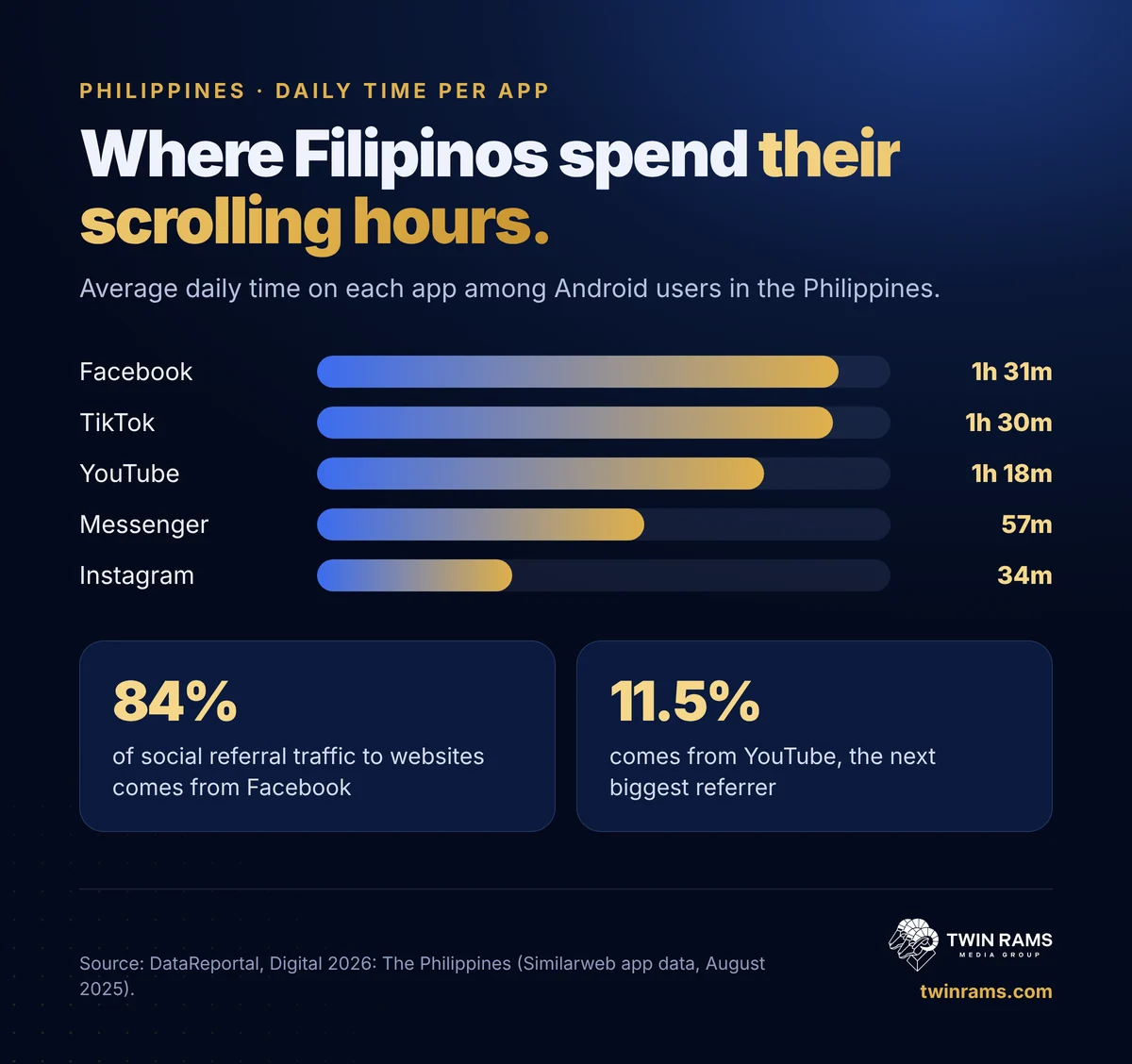
The Philippines has 98.0 million internet users, 83.8% of the population, and 95.8 million social media user identities. Facebook reaches 94.9% of internet users aged 16 and over, and Filipinos spend about 1 hour 31 minutes a day on Facebook and 1 hour 30 minutes on TikTok (DataReportal, Digital 2026). The digital economy hit $36 billion in 2025 (e-Conomy SEA 2025). The audience is there. Most launch mistakes come from how brands show up in front of it.
1. Translating instead of localizing
A word-for-word translation of your global campaign rarely lands. Filipinos switch between English, Filipino and Taglish all day, and the mix changes by audience, platform and region. Copy that sounds translated reads as foreign. Start from the message, not the sentence, and rewrite it the way your customers actually talk.
2. Planning for Manila only
Metro Manila is the obvious starting point, but it is not the whole country. The Philippines spans more than 7,000 islands across Luzon, Visayas and Mindanao, and each has its own media habits and dialects. Decide early which regions matter to you, and plan creative and distribution for them on purpose.
3. Treating influencers as a media buy
Filipino audiences trust the creators they follow, but they can also tell when a post is just a paid placement. Pick creators whose audience matches your customers, give them room to talk about your product in their own voice, and connect the campaign to PR and paid social so the buzz has somewhere to go.
4. Launching without local proof
Global awards and overseas reviews help, but buyers here look for local signals: Filipino customers, local media coverage and recommendations from people they know. Build that proof into the launch itself, with early adopters, reviews and coverage you can point to.
5. Going quiet after launch week
A big launch followed by silence wastes the attention you paid for. Plan the months after launch before you go live: always-on social, follow-up PR, retargeting and a clear way to turn interest into sales.
The short version
Launch like a local, not a tourist. If you want a crew that already knows the ground, see our Philippines Market Launch.